
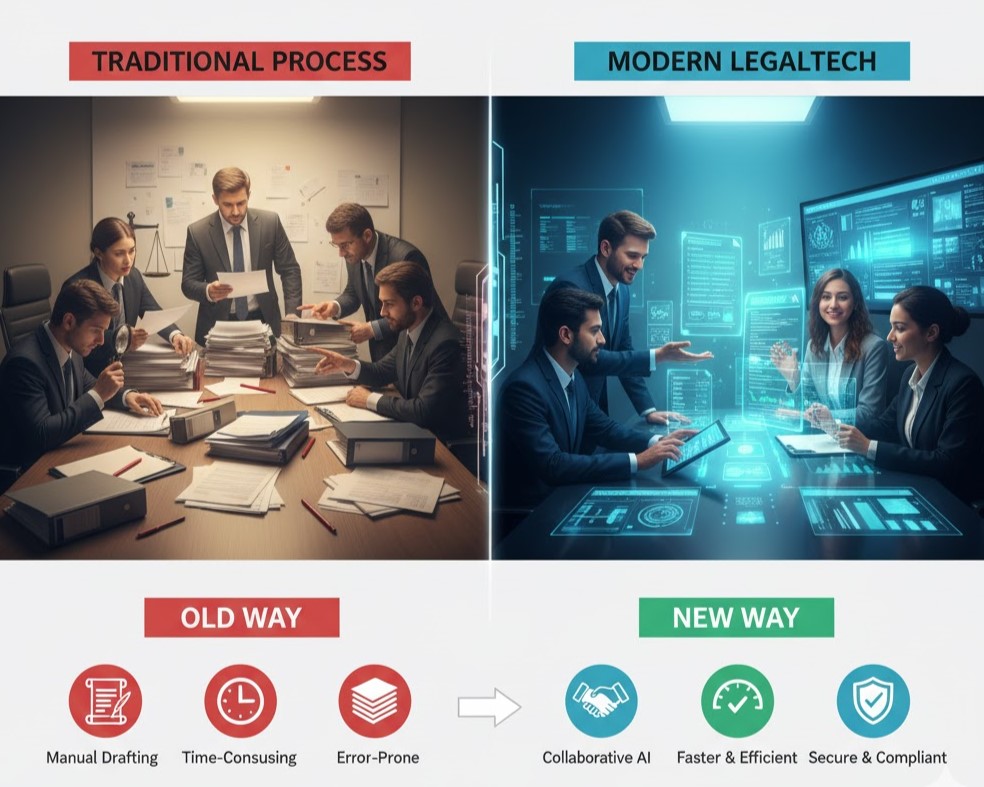
In high-stakes deal-making, the speed and quality of contract negotiation are paramount. The traditional process of endless back-and-forth, manual redlining, and risk checking has been rendered obsolete by tech in law. Today, Artificial Intelligence (AI) and automated platforms empower lawyers to negotiate faster, more strategically, and with far greater precision.
At LexMatter, we highlight how integrating technology is not just an efficiency gain but a fundamental upgrade to modern legal practice.
1. Data-Driven Negotiation Strategy
Technology transforms negotiation from an art based on experience into a science based on data.
- Risk Scoring: AI contract analysis tools use Machine Learning (ML) to instantly assign risk scores to specific clauses, terms, or entire third-party contracts based on internal compliance standards and historical litigation outcomes. This allows a lawyer to prioritize which issues to redline, focusing attention on high-exposure terms rather than minor stylistic points.
- Benchmarking and Market Intelligence: AI platforms can compare a specific clause (e.g., limitation of liability, indemnity) against the firm’s or industry’s entire portfolio of closed deals. This provides the lawyer with real-time insights into what constitutes a “market standard” term, improving negotiation leverage.
- Playbook Adherence: Lawyers can upload a digital “Playbook” of pre-approved fallback clauses and acceptance thresholds. The AI then automatically flags any deviation from the playbook, ensuring consistency across all contracts and preventing human error caused by fatigue or oversight.
2. Accelerated Deal Cycles and Time Savings
Reducing the contract lifecycle is a primary value proposition of tech in law.
- Automated Redlining: Advanced AI can not only flag issues but also automatically generate redlines and suggested revisions using preferred language, effectively mimicking an attorney’s initial review in minutes instead of hours.
- Single-Platform Collaboration: Contract Lifecycle Management (CLM) systems centralize the entire negotiation process. Both internal teams and external counterparties can often collaborate and comment on a single, secure digital document, eliminating the chaos of version control, scattered email threads, and lost attachments.
- Bottleneck Analytics: These tools track how long a contract sits in each stage and with which department (e.g., Sales, Finance, Legal). This data identifies process bottlenecks, allowing legal operations teams to improve workflows and reduce the time to close deals by up to 50%.
3. The Evolving Role of the Lawyer
Technology doesn’t replace the negotiator; it frees them to be a better one.
- Focus on Strategy: By automating the bulk of the risk review and initial redlining, lawyers are freed from “eyeball review.” Their time is reallocated to high-value work: complex business structuring, face-to-face strategizing, and handling the most sensitive, non-standard negotiation points.
- Enhanced Communication: Technology provides clear, data-backed rationale for proposed edits, which can make communication with the counterparty more transparent and less adversarial.
Mastering the intelligent use of these platforms is the most crucial element of modern law training and is the key to securing better outcomes for clients, faster.