
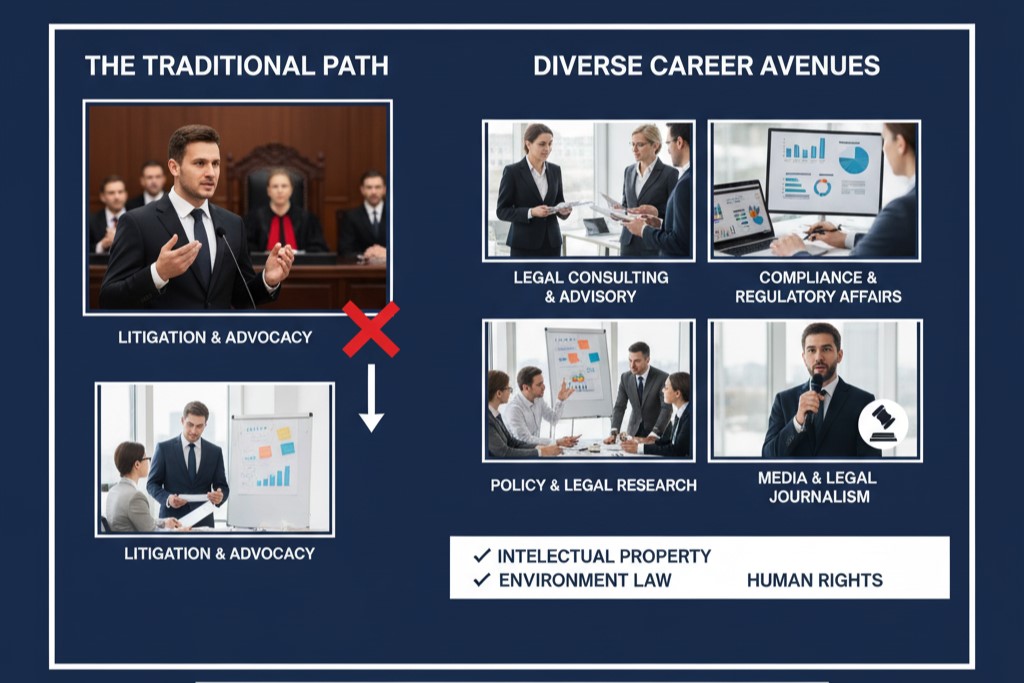
The image of a law graduate often involves a courtroom, robed judges, and dramatic cross-examinations. While this traditional path remains vital, the truth is a law degree is one of the most versatile and valuable qualifications you can hold. The rigorous training in critical thinking, complex problem-solving, and persuasive communication equips you for an impressive array of careers far beyond litigation.
At LexMatter, we understand that your legal education is a powerful asset, not a limiting factor. If you’re a law graduate looking to build a career that doesn’t involve practicing in a court, here is a breakdown of non-traditional, in-demand paths where your JD or LLB degree will give you a significant advantage.
1. The Corporate and Financial Sectors
Law graduates thrive in business environments because they understand risk, regulation, and contractual relationships—skills essential for any company’s success.
- Compliance and Risk Officer: These professionals ensure a business operates within legal and ethical guidelines. Industries like finance, healthcare, and tech have a massive demand for law-trained individuals to handle Anti-Money Laundering (AML), data privacy, and industry-specific regulations.
- In-House Counsel/Legal Advisor: You work directly for a single company, providing advice on everything from employment issues and internal policies to major business deals and contract management. This role focuses on proactive legal strategy rather than reactive litigation.
- Management Consultant: Consulting firms value the analytical and structured approach that law school instills. As a consultant, you’ll dissect complex business problems, create logical solutions, and advise senior leadership.
- Financial & Investment Banking Roles: Your ability to interpret complex legislation, especially in areas like securities and tax law, makes you a prime candidate for roles such as Risk Analyst, Trust Officer, or Tax Consultant.
2. The Intersection of Law and Technology (LegalTech)
Legal technology is a rapidly expanding field, creating entirely new roles for law graduates who have an affinity for tech and innovation.
- Legal Technologist: You act as the ‘translator’ between legal teams and software developers. Your job is to automate legal processes, develop tech tools for case management, and implement AI solutions to increase a law firm or legal department’s efficiency.
- Data Privacy Engineer/Analyst: With global privacy laws (like GDPR) becoming stricter, your legal knowledge is essential for building and implementing technical solutions that ensure the collection and handling of user data is legally compliant.
- Legal Operations (Legal Ops): This role focuses on improving the delivery of legal services, viewing the legal department as a business unit. You manage vendor relationships, optimize budgets, and implement legal department strategy.
3. Public Service, Policy, and Diplomacy
For graduates driven by policy and social change, a legal background provides the perfect platform to shape the rules, not just interpret them.
- Policy Advisor/Public Policy Analyst: Working for government agencies, NGOs, or think tanks, you analyze proposed laws, draft white papers, and recommend policy changes. Your persuasive writing and research skills are crucial for influencing legislation.
- Civil Service and Government Roles: Many roles within the government—from legislative counsel to administrative positions—require a deep understanding of the legal framework to implement policy effectively.
- Mediator or Arbitrator: In Alternative Dispute Resolution (ADR), you use your negotiation and conflict-resolution skills to help parties resolve disputes outside of the courtroom.
4. Communication and Academia
Your rigorous training in research, writing, and logical argumentation is highly marketable in the communication and education fields.
- Legal Journalist/Correspondent: Media outlets need experts who can clearly and concisely explain complex legal developments, court rulings, and their policy implications to the general public.
- Legal Publishing and Editing: Professionals are needed to draft, edit, and update legal textbooks, online databases, and legal commentaries for publishing houses and legal tech companies.
- Academia and Teaching: With an advanced degree (like an LLM or PhD), you can pursue a career as a lecturer or professor, shaping the next generation of legal minds.
Your Legal Skills are Transferable
The skills you’ve honed in your law education are universally valuable:
| Core Legal Skill | Translation to Non-Traditional Role |
| Analysis & Research | Problem-solving for Management Consulting or Policy Analysis. |
| Persuasive Writing | Drafting reports and proposals for Business Development or Journalism. |
| Negotiation & Strategy | Structuring deals as In-House Counsel or resolving disputes as a Mediator. |
| Attention to Detail | Ensuring regulatory adherence as a Compliance Officer or reviewing documents as a Contract Manager. |
At LexMatter, we encourage you to view your law degree as a versatile key that unlocks countless doors. The best non-traditional career is the one that allows you to combine your legal expertise with your personal passions.
Ready to explore a career beyond the court? The legal world is changing, and so are the opportunities.
Contact Us at LexMatter today to connect with our career advisors and start building your non-traditional path.