
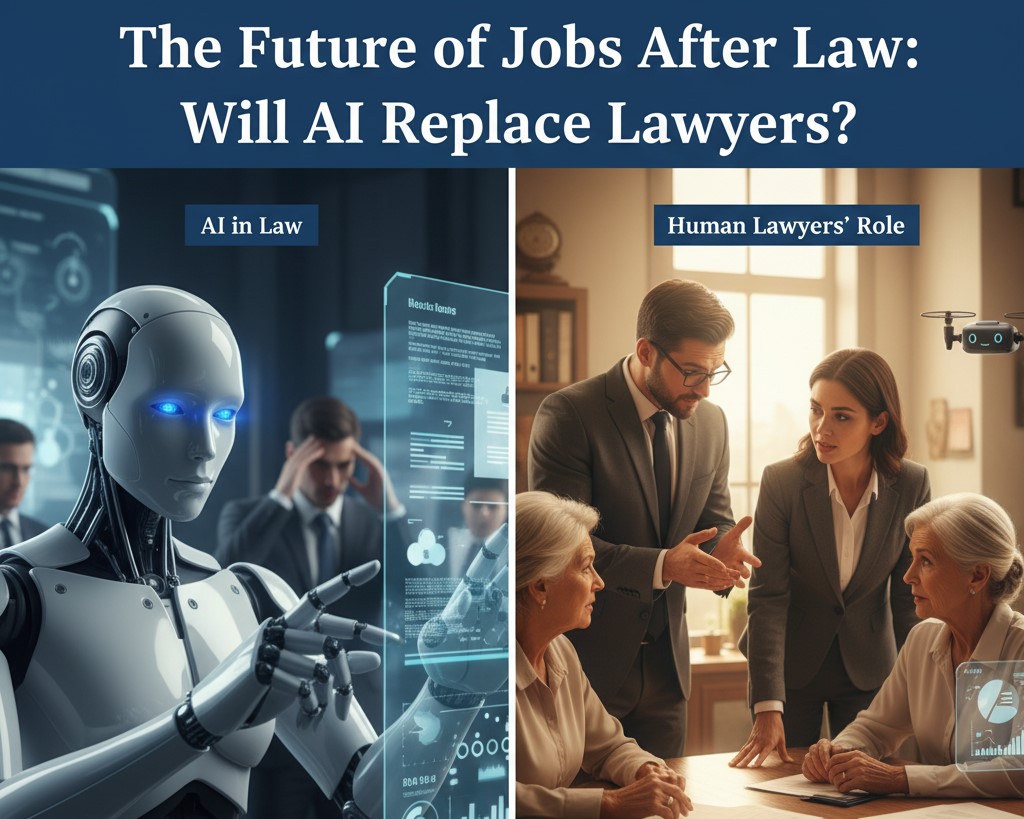
The question isn’t if AI will impact your Law Career, but how you will use it. Artificial Intelligence is not coming for the lawyer; it’s coming for the tedious parts of the job.
At LexMatter, we view the rise of AI not as an existential threat, but as a catalyst for a Future of Law that is more strategic, human-centric, and efficient.
The Tasks AI Will Automate (And Why That’s Good) 🤖
AI’s core strength lies in its ability to process massive amounts of data at superhuman speed. These are the areas where it is already becoming an indispensable “co-pilot”:
- Legal Research: AI-powered platforms can sift through millions of cases and statutes to find the most relevant precedents in minutes, dramatically reducing the hours traditionally spent by junior associates.
- Document Review & E-Discovery: AI can identify key clauses, flag risks, and categorize vast volumes of contracts and discovery materials up to 90% faster than human teams.
- Routine Drafting: Generating first drafts of standard legal documents, like basic NDAs, simple wills, or regulatory compliance forms, can be largely automated, ensuring consistency and speed.
- Case Outcome Prediction: By analyzing historical litigation data, AI can offer predictive insights, helping lawyers and clients make data-driven decisions on whether to settle or proceed to trial.
The reality is that AI won’t replace the lawyer, but lawyers who use AI will replace those who don’t.
The Irreplaceable Human Element in the Law Career 🧠
As AI takes over the routine, analytical grunt work, the value of the lawyer shifts entirely to skills that machines cannot replicate. The Future of Law demands professionals who excel in the following human-centric domains:
- Strategic Judgment and Ethical Reasoning: AI can present a lawyer with facts and precedents, but only a human can synthesize that data with ethical considerations, a client’s risk tolerance, and the nuances of a specific jurisdiction or judge. The complex weighing of what should be done remains uniquely human.
- Emotional Intelligence and Client Counseling: Legal matters are inherently emotional. AI cannot sit with a distraught client and offer the empathy, calm guidance, and trust-building required to manage their stress and elicit critical, sensitive information.
- Advocacy and Persuasion: Trial law, complex negotiations, and courtroom advocacy require real-time adaptation, reading body language, and crafting a compelling narrative that appeals to human judges and juries. This human-to-human connection is the ultimate non-automatable skill.
- Creative Problem-Solving: The most complex legal challenges often require lateral thinking, creative structuring of deals, and finding novel solutions that go beyond merely applying existing case law.
Preparing for the New Jobs After Law
The most successful lawyers of tomorrow will be AI-literate professionals. If you are preparing for a Law Career, your strategy must evolve:
- Become the Validator: Focus on learning how to effectively prompt AI, then critically review and validate its output for accuracy and legal compliance.
- Master the “Soft Skills”: Invest heavily in negotiation, client management, and leadership training. These high-value human skills will command a premium.
- Embrace Legal Tech: Don’t wait for your firm to teach you. Explore specialized legal AI tools and understand how they integrate into a modern legal workflow.
The message is clear: the most unfulfilling parts of your Law Career are on their way out. The age of AI is an age of opportunity, demanding that lawyers rise to a higher level of strategic and human-focused practice.
To explore how our programs at LexMatter can equip you with the skills to thrive in this new landscape, please Contact Us.