
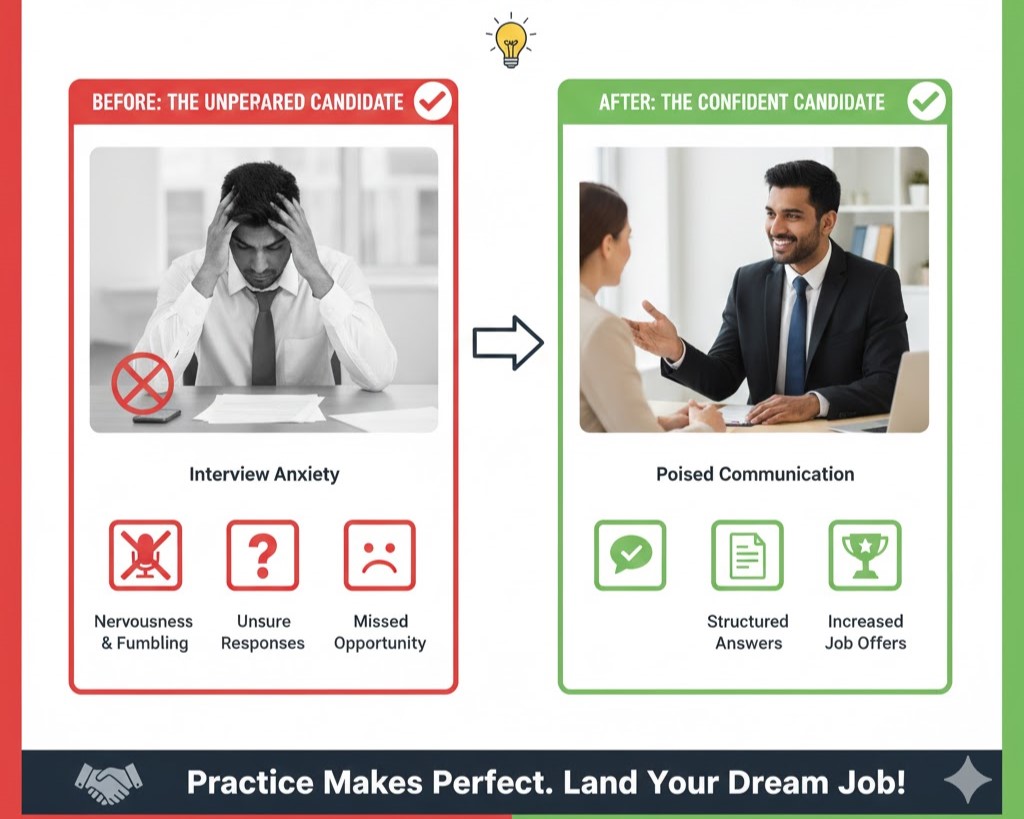
The interview room is the final, most crucial barrier standing between you and your ideal law job. While excellent grades and specialized legal training get you the interview, it is confident, polished performance that secures the offer. This is where mock interviews prove their indispensable value, transforming anxiety into assurance.
At LexMatter, we emphasize that a rigorous regimen of mock interviews is the single most effective tool for successful job placement, turning tentative applicants into confident professionals.
1. Mastering the Art of High-Pressure Communication
The real value of a mock session lies in replicating the pressure of the actual interview, allowing you to build vital mental and communicative resilience.
- Practicing the STAR Method Under Stress: Mock interviews force you to structure behavioral answers (Situation, Task, Action, Result) quickly and articulately, even when faced with unexpected questions. This disciplined approach ensures your responses are concise, relevant, and compelling.
- Controlling Non-Verbal Cues: Under stress, people fidget, avoid eye contact, or speak too quickly. In a mock setting, trainers provide feedback on your body language, tone, and pacing, ensuring you project the confidence and professionalism required for a serious law job.
- Polishing the “Why” and “How”: You learn to articulate your personal narrative—”Why law,” “Why this firm,” and “How your skills will benefit the client”—with conviction, turning vague statements into powerful personal branding points.
2. Identifying and Eliminating Blind Spots
You don’t know what you don’t know. Mock sessions offer objective, external feedback that reveals weak points you might otherwise overlook.
- Uncovering Gaps in Preparation: Interviewers often pose complex scenario-based or commercial awareness questions. A mock session will immediately highlight if your knowledge of current legal tech trends or recent market transactions is insufficient.
- Refining Your Weakness Answer: When asked about a weakness, many applicants panic. Mock training allows you to practice delivering a genuine, non-critical weakness and confidently pivoting it to a positive by discussing the specific, actionable steps you take to manage it.
- Mastering the Commercial Question: Law firm partners want to see commercial thinking. Mock sessions drill you on how to discuss a legal problem in terms of risk, value, and client strategy, moving beyond purely theoretical legal concepts.
3. Perfecting the Technical and Administrative Close
The final moments of the interview are often the most important for securing a job placement.
- Asking Smart Questions: Trainers ensure you have a list of insightful questions prepared for the interviewer—questions that show genuine curiosity about the firm’s strategy, mentorship, and practice area, rather than just salary or benefits.
- Handling the Salary Question: If compensation is addressed, mock sessions prepare you to handle the negotiation professionally, stating your expected range based on market research without being overly aggressive or underselling yourself.
- The Follow-Up: You practice writing a personalized, timely thank-you email that reiterates your interest and cleverly references a key point of discussion, leaving a lasting positive impression.
Ultimately, mock interviews are the bridge between academic knowledge and career success. They provide a safe space to fail, learn, and refine, ensuring that when the real opportunity arises, you are fully prepared to seize it and secure your ideal law job.
Ready to transform your interview skills and secure your job placement? Contact Us at LexMatter to explore our specialized mock interviews and career training programs.